The Character of Curiosity
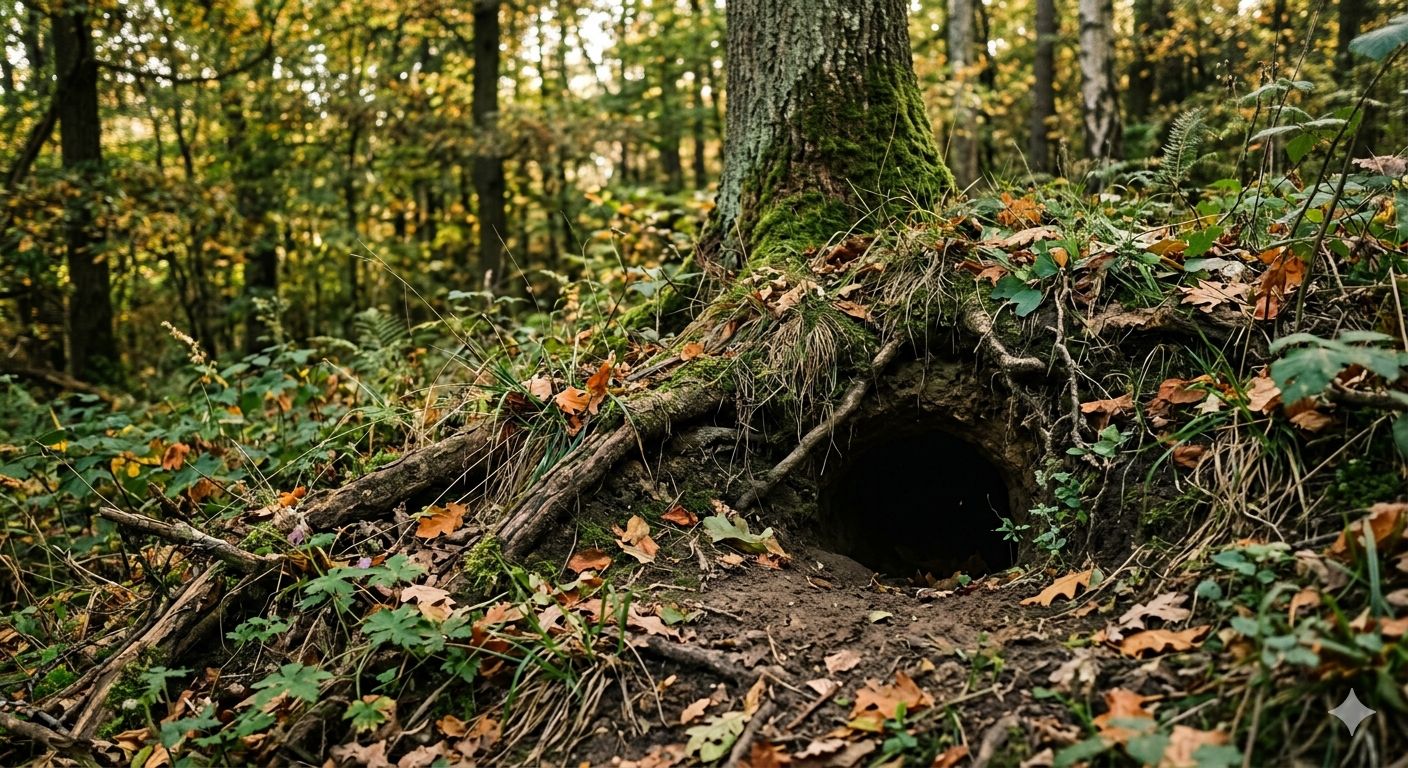
A child asks "why" countless times a day. To their parents' initial delight.
Past fifty, the question turns into "is this even worth it anymore?"
Somewhere between the two sits the thing we call getting older. And I don't mean the grey in the beard, or the lower back that announces each morning exactly what it makes of the weather.
I mean the moment you stop being curious for no reason at all.
Curiosity doesn't need a problem. No need to solve, no occasion required. It isn't the hunt for a solution, it's the appetite for a question. That's the bit we unlearn, or train out of ourselves, because being grown up supposedly means having an answer to everything, or being able to find one. Problem, need, offer, benefit: the tidy little economic chain we take for granted.
Neuroscience, to its credit, is unromantic about all this.
Matthias Gruber and Charan Ranganath (UC Davis, Neuron, 2014) used fMRI to show that curiosity lights up the same reward system as an external reward does. And more: in a curious state, the brain even holds on to things that have nothing to do with the original question.
Put plainly: a curious person doesn't just learn better. They learn on the side.
And here's the part that actually interests me.
Galli and colleagues (2018) ran the experiment again with older adults. The result: the learning boost from curiosity is every bit as large in sixty- to eighty-year-olds as in students. The dopamine system does get more sluggish with age, true. The effect holds anyway.
Sakaki, Yagi and Murayama go so far as to call curiosity a possible key to "adaptive ageing", getting older without it ending in retreat.
What fades isn't the ability. It's the state. We don't get too old to learn. We stop putting ourselves into the state where learning comes easy. That's where it sits.
Curiosity is no character trait. Not an achievement, but a condition you're in. Trainable. Losable. Revivable.
Which is why, for me, it's the foundation (!) of self-directed learning. Not didactics. Not learning platforms. Not the LMS, the LXP, or the next AI tutor.
Without curiosity, all the rest is just programme.
Surprise yourself.
Sources:
Gruber, Gelman & Ranganath (2014), "States of Curiosity Modulate Hippocampus-Dependent Learning via the Dopaminergic Circuit", Neuron.
Galli et al. (2018), "Learning facts during aging: the benefits of curiosity".
Sakaki, Yagi & Murayama (2018), "Curiosity in old age: A possible key to achieving adaptive aging", Neuroscience & Biobehavioral Reviews.