John Rae
What they knew about curiosity · I
For many years I was a member of a society that defends a dead man.
The John Rae Society is based in Scotland, and besides the restoration of a draughty manor house on Orkney called the Hall of Clestrain, its purpose is to set straight the memory of a man who, for more than a hundred years, has been mostly forgotten. You pay a membership fee so that a Scotsman almost nobody remembers is forgotten a little less. Sounds quirky. And it is. But Rae needed it, and that is exactly the story.
In 1845, Sir John Franklin sailed north with two ships and 129 men to find the Northwest Passage, the shortcut through the Arctic ice the British Empire had dreamt of for centuries. Erebus and Terror, two converted warships, stuffed with everything civilisation deemed indispensable: tinned food by the thousand, a library of over a thousand volumes, porcelain, silver cutlery (engraved, naturally). They set out and never came back. For a very long time both the myth of the Northwest Passage and the fate of the expedition remained unsolved. Well — one was solved a good deal sooner than the other, but the two hung together all the same.
What was found years later on King William Island is among the bitterest images in polar history, or at least among the most enduring in the public mind: a ship's boat, dragged across the ice by dying men, and inside it, beside the bodies, the silver cutlery. They had not let go of the engraved pieces, right to the end.
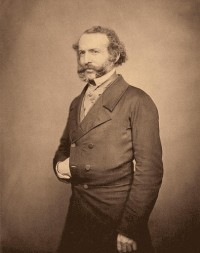
And then there is John Rae. A surgeon with the Hudson's Bay Company, born in 1813 on Orkney, one of those the Empire never turned into a hero because they didn't fit the heroic mould. Rae travelled light. No baggage train of tins, no floating library. He had done something that would never have occurred to the fine, established gentlemen in London: he had asked the people who lived there.
From the Inuit he learned how to build an igloo, live off the hunt, and travel hundreds of miles on snowshoes without freezing — and with the greatest economy of effort. One eyewitness called him the finest snowshoe walker of his day. On a single journey in the winter of 1851/52 he covered some 1,280 miles on foot, well over two thousand kilometres. Across more than four Arctic expeditions the total came to more than ten thousand miles and nearly eighteen hundred miles of mapped coastline. Franklin took civilisation into the ice and died with it. Rae left it at home and came back.
What made Rae Rae was many things. Toughness, skill, a body that shrugged all of it off. Courage and strength belong on the list too — but Franklin's men had those in abundance, and the ice took them anyway.
One thing didn't figure in London at all, and it is the thing this series is about: a particular kind of curiosity. The quiet kind. The kind that asks, and then — far rarer — takes the answer seriously. Rae asked the one question nobody back home was asking: how do the people who have always lived here actually manage it? He treated the knowledge of people who had survived in that cold for thousands of years as knowledge worth taking seriously. In an empire that saw the Inuit as "savages" at best, and their accounts as idle talk, that was very nearly a seditious thought.
And it was precisely this listening that brought him the truth in 1854. On a surveying journey Rae met Inuit who told him what they had seen and heard: white men, starving, at the end. And, in passing, that they had resorted to the last thing left to a person. Cannibalism. Rae believed them, because he had learned that they were reliable observers. For him this was no tactic produced for the occasion. Taking seriously the people others ignored, and setting down the uncomfortable account as faithfully as the comfortable one — that was how he worked, and most likely how he was in everything else. The curiosity that let him learn from the Inuit and the honesty with which he passed on their word were, in Rae, inseparable. He wrote it down and sent a confidential report to the Admiralty.
They made it public. And with that the dismantling began.
The notion that British officers might have eaten their dead comrades was simply unacceptable to Victorian England. Lady Franklin, the widow, waged a years-long campaign against the bearer of the bad news, and she had the most prominent voice in the land at her side: Charles Dickens. Dickens wrote against Rae, declared the Inuit categorically untrustworthy — "savages lie", ran the gist — and turned the man who had found the truth into a tactless fouler of his own nest.
It did no good that Rae was right. Later finds bore him out in every detail. And the Inuit along with him. It did no good either that the Admiralty awarded him the ten thousand pounds offered for establishing Franklin's fate — on the contrary, that was held against him all the more. The knighthood that nearly every other polar explorer of his time received was denied him. Whoever looked closely and took what he heard seriously was the first to be punished.
And yet, almost in passing, he had found the stretch of water that mattered. The strait that today bears the name Rae Strait was the only genuinely navigable route through the Passage — not the one Franklin had sought, but the one that worked. Half a century later Roald Amundsen sailed through exactly here and became the first to complete the Northwest Passage. He sailed through Rae's water and lived off Rae's method: travel light, learn from the locals, listen. Amundsen was celebrated. Rae remained the man with the ugly news. And for a long time he remained an outcast. And, in the frame of history, far worse: forgotten.
For a long time the story might have ended here, in the bitter. But it doesn't. In 2014, a hundred and twenty years after his death, Rae finally received a memorial stone in Westminster Abbey, there among the heroes of the Empire. In the same year the wreck of the Erebus was found on the Arctic seabed, the Terror two years later, roughly where the Inuit had always said they were. The "savages", as it turned out, had not been mistaken. Why would they have been?
A hundred and sixty years after his journey, a strait in the far north carries his name, and on the seabed the ships lie exactly where his witnesses had placed them. The ice kept faith with him longer than the Empire did. For a society that defends a dead man, that is really rather a good reason.
Surprise yourself.
More on the man and the restoration of his birthplace at the John Rae Society.